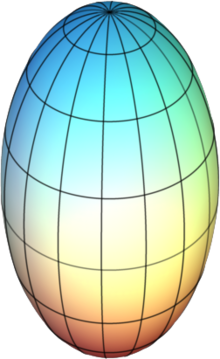
This is an svg element, which is a vector graphics format. That means that every circle is specified by markup language saying where it is, what color it is, and so on. When I post details, I'll restrict myself to png images.
Home of the "flow-dividers" concept (a.k.a. friction-buffers): nested shrouds around rotating artificial gravity tubes, which are inside of a larger microgravity space station. Allows flexible 3D mega-cities with safe, fast, comfortable, travel internally. Also has synergy with passive pressurization via wall self-gravitation, which is far-future.
Wednesday, January 15, 2014
SVG Version of Fractal Rock Filling Pattern
This is an svg element, which is a vector graphics format. That means that every circle is specified by markup language saying where it is, what color it is, and so on. When I post details, I'll restrict myself to png images.
Thursday, November 21, 2013
Why Not Live in the Empty Spaces Inside Asteroids?
Rubble piles are everywhere in our solar system. The majority of asteroids are likely to be rubble piles. This means that they are a conglomeration of many smaller fragments which are just resting against each other, held by their collective gravity. Within one of those pores inside an asteroid, why not just partition off a defined volume by lining the crevices with a thin sheet that can act as a pressure barrier, and use that as a giant permanent habitat? This turns out to be a surprisingly good thought.
The object you use for this would have to be well beyond the minimum size for a normal gravity balloon. That's because if 1 atmosphere of pressure is greater than the force transmitted through the rocks, filling it with air would cause the rocks to unset themselves and lose their structure. For this idea, let's just leave all of the load-bearing rocks where we find them. There is certain to be lots of smaller rubble that is not structurally relevant. Our solar system also gives us an upper bound on the object's mass. Beyond a certain mass limit, the rubble no longer has sufficient strength and will collapse its pores. Interestingly, physics then predicts that the surface gravity will then increase, and this may cause a cascading failure that compresses the entire body, beginning the process of differentiation.
To pick an asteroid to build a habitat out of, we're not constrained by mass anymore, since the goal is to use the pores, which are already at vacuum. I will refer to the "rock pressure" as the pressure that has to be transmitted by the structural rocks. Between those rocks, you could keep breathable air. I illustrated the basics of the concepts for Sylvia, which is very nearly the largest body with significant porosity. By my data, it also has the greatest void volume (which comes from a combination of mass and density parameters). You would need to place the pressure boundary somewhere below the 1 atm line, but anywhere within that boundary would do. So here's what I have in mind:
This would create the maximum amount of volume with breathable air (without an "inflating" process). It is huge, and the total mass of air which can be contained comes out to nearly 18% of Earth's entire atmosphere. If you sum up values for even a small set of asteroids for which we know the porosity of, it becomes clear the the main belt could easily hold several times as much breathable air as Earth with this method.
This also gets around the problem of "inflatability" that I've referred to several times. There's nothing to inflate and little matter to move around. You just erect a thin plastic-ish barrier to keep the air in, and the "supports" for this surface are already there. Well, almost. There remains an issue that the crevices will not be trivial to seal. If you look at packing patterns for spheres in 3D space, the area that needs to be sealed will be on the order of the diameter of the balls themselves. This is a problem, but one possible solution would be to use the movable rubble as a backstop. If the rubble comes in a fairly smooth size distribution, then the large rocks will be locked in place due to the pressure from gravity and the smaller ones will be floating around, but those smaller ones will be fitting into the interstitial locations. If you corral those smaller rocks to the edge of where you want to put the pressure boundary, they can provide a more continuous backstop for the pressure boundary. I tried to illustrate this below.
At the smallest end, you might end up needing to mill some rocks into basically gravel, and use that to fill in the final crevices. Basically, it's a hierarchy problem. You will need rocks of all sizes to compliment themselves in order to create a relatively flat surface over which to overlay the air boundary. This concept produces surprising parameters.
There is really no denying that:
- This is possible with drastically minimal technology as opposed to other gravity balloon concepts
- It can scale to diameters of around 300 km - unthinkably huge
Obvious problems with the design:
- Pore size might not be large enough for artificial gravity rotating structures
- Movable rock sizes might not be small enough to support pressure seal
- Could be too much rubble, difficult to clear
- Thermal and chemical impact on structural rocks from the breathable air
Obviously, you would not have a totally continuously atmosphere, of the type portrayed in the Virga world. However, we don't know how large these pores are. A single pore inside Sylvia might be as large as the largest inflatable gravity balloon. It is truly a mind-blowing concept. Of course, you can't get something for nothing, so this is a concept assisted by the material strength of the rubble. Compressive, not tensile strength. Gravity pulls "in" and the rocks push "out". Then, the pressure boundary can physically be constructed with minimal effort by pushing "out" on a layer of rocks which are pulled "in" by gravity. I return to the concept of breaking length that I've addressed before. The size of Sylvia corresponds to a material breaking length of about 375 meters.
In other words, the rocks are stressed to the same degree that they would be if sitting on the surface of Earth and raising to that height. This is the type of scale we're looking at.
Does that sound implausible? No, not at all. That scale is, actually extremely common on Earth. We see cliffs in Earth's natural geography that rise much higher than this very frequently. We even sometimes see free-standing rocks that approach the scale that I'm talking about. Like this:
If the asteroid Sylvia is made of about the same type of rock as this thing, then it makes sense that it has not collapsed into itself, and it also makes sense that bodies much larger than it have. This is also the boulder "size" that the inhabitants would have "hanging over their heads". Of course, this has no direct bearing on the pore size, because those were formed in zero gravity, which evolves very differently from rocks on Earth.
For more information about this reference case, I compiled this table.
| Parameter | Value |
|---|---|
| Natural Asteroid Radius | 139.2 km |
| Central Rock Pressure | 46 atm |
| Radius for 1 atm | 137.7 km (98.9% of radius) |
| Radius for 2 atm | 136.1 km (97.8% of radius) |
| Usable Empty Space | 10.6 million km^3 |
| Containable Air | 18.9% of Earth's atmosphere |
| Tubes that could fit | 10.6 million of reference design |
| Corresponding Population | 116 billion people |
| Incident Sunlight | 6.5 TW |
| Max Surface Radiation | 878 TW |
| Rock Thermal Energy | 53,659 TW-years (heatup to room temp) |
| Surface Gravity | 0.05 m/s2 (0.005 g) |
| Weight of Tubes | 13,459 tonnes of force |
| Geosynchronous Radius | 205.8 km |
| Delta V for: | |
| Center-to-Surface | 84 m/s (188 mph) |
| Surface-to-Space | 119 m/s (266 mph) |
Many interesting things lie in this information. For some values, I've used the reference tube design in my last entry. That is a tube where about 20,000 people can live and uses fairly conservative assumptions. It also assumes reasonable packing density. With the parameters of this potential habitat, we find that it could house a huge number of people by this method. However, that seems impractical. There are energetic concerns that come along with this. It might make sense to reduce people-density up an order of magnitude or so, and leave more empty space. But that depends on the type of vision you're trying to realize.
Either way, the amount of air that could be held is gigantic. This object has a semi-major axis of about 3.5 AU, which means that the solar radiation is much less, and insufficient to supply any more than maybe 1 billion people. But if they had an independent nuclear fuel source, they use energy at a much higher rate. I included the black-body radiation limit for this object's size at 293 Kelvin, which is room temperature. The idea is that if you went above this number, you would eventually have to place radiators far above the surface itself.
Then again, why would you need radiators at all? The object of 87 Sylvia is huge, and it's far below room temperature to start out at. At that size, internal heat from nuclear decay isn't very significant, so the inside has probably equalized with the average surface temperature, which should be somewhere around 147 Kelvin. If you were going to increase it from that temperature to room temperature, it would consume 10s of 100s of years of the full power output of such a society. So in the beginning, there's no need for radiators in the first place. But this bring up another good issue - might it be too cold? Well, it would depend on the heat transfer rate, and this will depend on the size of the pores, which again, we don't know. However, km-scale gravity balloons are almost perfectly insulated. If the pores are workable large to begin with, then cool-down probably isn't going to be a problem. I suspect that I could prove this with numbers, but I haven't done it yet.
Now let's talk about the issues with gravity. In this concept we've forfeited the attractive idea of having a fully zero-gravity habitable area. This will change many things, and stuff can no longer float around the volume. The most important consequence is that the artificial gravity tubes will have to be anchored. It would still take a really really long time for them to fall any significant distance, but it still must be dealt with by mechanical bearings of some type. Cranes on Earth can have capacities on the order of 400 tonnes or so, so it seems that this problem is of a greater scale than familiar construction activities. Still, the mechanical bearing wouldn't have to do much, it would be a simple tether, and it would be static. For the scale of about 14,000 tonnes of force, I imagine that would be workable.
There are also some interesting orbital properties of this object. It does have two moons, which has already attracted the attention of astronomers, although it has no relevance to the idea I'm pitching here. If you wanted to use it as a space transport slingshot, you could since geosynchronous orbit isn't very far from its surface. However, it's location is not ideal. It is a poster-child of the asteroid belt, at about 3.5 AU. That would create difficulty in getting to it. Even extremely quick, snappy, trips would probably take on the order of years to complete. There are much closer objects to set up simple habitats nearer to Mars orbit, and this is not one of them. This is the gulf that you have to cross in order to find such a favorable natural structure which can serve as a habitat for countless numbers of humans.
I can think of some other really quirky issues with using this body in this way. Some of the rubble might be ice. Who knows? As you use this to hold air at room-temperature, you might cause changes in the rock. This would be bad if it caused collapse, but it also might cause unpredicted geysers and things of that sort. There is sure to be no lack of material, and even a great diversity of material since it may have been created by accumulating many other smaller (diverse) bodies. There's no telling what kind of scientific unknowns you would be dealing with.
For now, even the most basic geometry of this thing's interior is a secret. But you could, in theory at least, just walk in, put up drapes, and you would could have a massive pressurized environment.
Wednesday, November 13, 2013
The Principle of Mediocrity (regarding access and size)
Conceptually, this blog is mostly focused on the idea of "moving into" an asteroid by drilling a hole into the center, sealing the area off, and slowly replacing the rock with air. Denser, more metalic, rock will have a higher central pressure for the same mass. This effect is actually quite dramatic. Let's consider the wall thickness needed to have a marginally small balloon of air in the center.
varies a great deal with the material density
I used several density benchmarks from a useful paper for the points in that graph, which just represent different cases. From this, you would obviously conclude that a more dense asteroid would be more easier to work with, at least at first. This is somewhat the case with Eros. Its material has a specific gravity of 2.67 on average, so it can hold normal atmosphere even though it is much smaller than Phobos, which struggles to do so itself.
The more complicated twist is a concept I call "Inflatability", which seems approproate given the balloon references. Basically, as you enlarge the center cavity, the pressure due to the force on gravity on the rock walls decreases, and the air pressure experienced in the habitat (in the absence of other structural factors) droops. This will obviously put the pressure below the habitable limit at some point, and this point will be different for different bodies. However, the math works out in an interesting way. Basically, the geometry can be reduced to a "dimensionless parameter", which represents a relative degree of inflation. So start with a marginal central volume, and then increase this to a final state that looks more like a balloon. We can show that the percentage drop in pressure follows from the fraction of the asteroids initial radius the volume is expanded to. This is actually fairly easy to picture with a graph that I've sense updated since I revisited the governing equations last post.
Side note: This graph was corrected from the previous version. This one correctly reflects the slight stall at low radii, due to the nature of the hole's effect. Keep in mind that volume goes as R^3, so the function's curvature is uniformly positive when in terms of volume. I still included the case for an initially rotating asteroid but this would be extremely uncommon in practice - it's rare to see a center pressure correction of more than 1% due to rotation.
If you think about it, this raises an interesting dilema. Since the pressure droops according to the *fraction* of the initial radius, lower density bodies have a lower droop, but longer access tunnel. Consider that this is a tradeoff of considerations that would matter more to a civilization depending on the stage of development they're on. Their challenge might be:
- Establishing the access tunnel and pressure seal
- Ability to further increase the size of the habitat
The droop that can be tolerated isn't very clear to establish. Skylab was a space station with a cabin pressure of around 0.34 atmospheres, so this is obviously workable, but it's not clear if its desirable long term. The NSS suggests 0.5 atmospheres for a permanent space station. On the other end, I've looked into compressed air Oxygen toxicity limits, which tend to be a problem around 3 atmospheres. In fact, people have spent days on-end in this kind of pressure. However, Earth has a pretty constant pressure for the most part, and the upper limit is based on assumptions that don't have to be true. So we conclude that both ends of this limit can be pushed one way or the other, but for now, we might as well look to a factor of 8x or so just to establish the maximum pressure fluctuation that we'll tollerate. This isn't absolute, but by the nature of biological properties of humans, the error bars are large. For a given pressure ratio, we look to querry how large of a habitat we can make. I tried to illustrate this with the following graph.
This tells a very interesting story. The merit of a gravity balloon is large volume with no structural materials. This puts the maximum size you can produce into a helpful context. These only radii figures, so it follows that (for instance) a livable diameter of 80 km can be produced by using an asteroid with a specific gravity of 1.3 and tollerating a pressure drop of a factor of 8. Now, an 80 km sphere is pretty large, but I certainly think it's a desirable *concept*, although obviously long-term. Even if you can't go beyond a diameter of 2 or 4 km, creating such a habitat would be a mindblowing advancement of humans into space. For every case, however, producing the air itself will remain a challenge since it scales directly proportionally with volume.
Friday, September 20, 2013
Asteroid Macroporosity and Caves
For background, micro-porosity describes small voids of the type that we can measure from fallen meteoroids. Those are to be expected (probably from some bubbling of intermixed volatiles). Macro-porosity includes voids of large sizes. How large? It seems that no one knows. In the fact of the massive deficit of knowledge, there are huge implications for our future in space. The most shocking detail I encountered from that above question is this:
"The (scarce) theoretical works on that point predict an internal structure where most of the void are deep inside, while the shell around is pretty-much packed."
This is a fairly direct response to my own question - of how Mathilde can possibly look solid when literally half of it is empty. No matter how long I stare at the pictures taken by the NEAR Shoemaker, I can't convince myself that there are any particular caves or anything of the like on this scale.
50% is no small fraction obviously. A 1999 paper in Nature is a good example of what is probably meant by the scarce theoretical work in this subject. These conglomerations would leave a large fraction of the interior as void, but it's hard to imagine it reaching half.
The mind boggles to transition from this relatively smooth surface to an interior made mostly of space, crisscrossed by boulders the size of American cities. Would there be openings in the surface to these voids? It starts sounding like the common sci-fi trope of a hollow planet.
Mathematics of Breaking Length
I keep returning to the importance of a number of mathematical details of structural mechanics of self-gravitating bodies. The fearsome size (about 50 km diameter) of Mathilde is more incredible when you consider that the rock in the center is under constant stress from all that weight and is actually no worse off because of it. The best model might be something like a gumball machine. Each gumball is hollow and has to resist the pressures by 3 or 4 other gumballs pressed against its side. This is the true failure mechanism. It relies on the overall pressure of the pile, as well as its own size.
In general, the pressure that has to be resisted is the same central pressure that I've been calculating in this blog over and over again. After all, the voids are literally a vacuum. Actually, we don't know this for sure, but it's the best assumption we have right now. There's no good case for how gases are held in. If there were, that would constitute a natural gravity balloon. While I think it's a fairly stable construction, that's after careful consideration and engineering to implement barriers that block gas movement.
This equation for central pressure is:
$$P = \frac{2}{3} G \rho^2 \pi R^2$$
to convert this into structural requirements, we need to introduce the material strength, sigma. In a simplistic sense this can just be equal to pressure. I have a mental image of a bar spanning the entire diameter, made of the same material as the rest of the asteroid. Physically, this is fairly nonsensical butit gets the job done for a simple approximation.
$$\frac{\sigma}{\rho} > \frac{2}{3} G \rho \pi R^2$$
For the specific case of Mathilde's size and density, this requirement is 126 m2 / s2. Compare to a specific strength for concrete of over 4,000 m2 / s2. If anything, this probably indicates that the conglomeration of material inside the asteroid is, in fact, not strong. Alternatively, it shows that a series of breaking and rearrangement has already taken place.
Consider the alternative of a building on Earth. It also has some average bulk density that results in a pressure at the bottom. Atmospheric pressure is disregarded because it's irrelevant to material failure.
$$P = \rho g h$$
For direct comparison we would like to put this in terms of material specific strength. We have to decouple the "load" and "supports" to be practical, but I'm not too interested in that right now. For
$$\sigma = g h \rho \\
\sigma / \rho > g h$$
This is the concept of breaking length. For concrete the "breaking length" is 440 meters. That corresponds to a specific strength value of (9.8 m/s2) (0.44 km) = 4,312 m2/s2. In short, this is saying that you could stand up a concrete tower 440 meters high, but no higher without it buckling under its own weight. Self-gravitation is very fundamentally different. To illustrate this point, I want to compare the two cases of resisting void collapse in asteroids to breaking length on Earth. This is simply a matter of requiring the specific strength to be the same in both cases. In a sense, we use breaking length as a metric of specific strength itself.
$$g h = \frac{2}{3} G \rho \pi R^2 \\
R = \sqrt{ \frac{g h }{ \frac{2}{3} G \rho \pi } }$$
For reference, Mathilde has a diameter of 53 km. So resisting collapse of the voids at this size would be roughly equal to the task of resisting breaking over a length of 12 meters of the surface of Earth. Obviously this is because gravity is weak, and the Earth is big. Still, it's an interesting observation that's really hard to wrap one's head around.
Implication
In this blog, and elsewhere, it's generally taken for granted that making it to the center of a large asteroid would be difficult task. For many, yes, this is the case since the macro-porosity is effectively zero. For the majority, however, it's either fairly major (>5%) or we just don't know yet.
It's incredible to think that drilling to the center of such an asteroid... might not require any drilling. You might be able to just float on in a giant cave entrance. Exactly how much will be accessible and how easily is an unanswered question.
Even candidates like Eros have a major macro-porosity value, somewhere in the neighborhood of 10%. This is a small amount of the total, but in terms of access, it could make an unbelievable difference. If future methods could give a good idea of the 3D distribution of matter in an asteroid, and then the composition as well, then development of their resources will be a very different matter.
There are also major changes to the pressure-volume relationships. I've never even considered the idea of increasing the density of the rock, but this would be possible for highly porous candidates. It would be obvious to use the existing voids to store resources or excavated rock. Doing so doesn't quite reduce the pressure due to self-gravitation. On the other hand, moving around large rocks while at the same time avoiding cave-ins and other material rearrangement would not be an easy task. Still, it's something that can be analyzed and worked around.
Thursday, July 4, 2013
Space Colonies Inside Irregular Asteroids
- the body exhibits a non-spherical shape, like a blob
- its rock has some amount of compressive strength
Irregular Asteroid Stresses
Call the largest dimension the polar axis. This is chosen because it is the axis of symmetry. In that case of planets, the axis of symmetry is typically the smallest one because they are roughly oblate spheroids, whereas 10-km scale irregular asteroids are more like a prolate spheroid. In other words, this is the geometric model I'm using:
This doesn't look very far off for many of the asteroids we've photographed. Eros, in particular, among others. With this in mind, we can consider the stresses that he object's own self-gravity will cause on its interior. For a mental model, this is somewhat similar to a building on Earth. In order to "stick up", it has to have some strength. The only difference between an asteroid sticking out as a prolate spheroid and a building standing up on the surface of Earth, is that the asteroid deviates from a spherical shape, while the building deviates from the flat surface of the ground.
This protrusion will only lead to compressive stress here. After all, it doesn't have to stand up to the wind or any other dynamic forces. If you want a rough formula for exactly how much compressive stress, then consider the gravitational head. For a bad approximation, imagine that the gravitational field only varies with radius. Then it's obvious that the equatorial radius is smaller than the polar radius. That leads to an inconsistency if you imagine the object material is fluid-like. You obtain a different pressure if you measure the elevation drop from the equator surface to the center versus if you measured from the polar surface to the center. It is precisely the difference between these two pressure that is the non-isotropic force, or the compressive force. It has the same units as pressure, because these are both elements within the stess tensor - the bread and butter of civil engineering. After all, the entire proposal basically comes down to civil engineering.
For some math, you can imagine that this stress will be approximately equal to the gravity on the surface of the asteroid (which is an average figure itself) times the elevation difference at the equator and the pole. Without going into details here, you can get a factor of 2/5 to add onto this. This isn't perfect, but it's pretty good.
$$\sigma_z \approx \frac{2}{5} \rho g \left( R_x - R_z \right)$$
To illustrate the occurrence of this compressive force, I've used some arrows here. Imagine that a pressure without any material stress would entail 4 arrows from all directions in this 2D approximation. In reality pressure acts all around you. So instead of that, we have some preferential direction where the pressure squeezes from only two sides. I did my best to illustrate that for the prolate spheroid shape I'm talking about here. This is briefly representative for the natural state of the asteroids I'm talking about.
You can easily extend the idea to a hole in the center. About the same amount of net force will be present over a cross section at the equator. If you drill a hole in the center, that means that there's less area over which to distribute this force. Logically, that means that the stress would be intensified by the presence of this hole.
There are some finer points to this argument - mainly that in the above model the bubble would have to have some internal pressure. This is what we're talking about for the gravity balloon. Specifically, the pressure would have to be exactly enough such that the top and the bottom of the hole in the above image wouldn't experience any compressive stress. You could change that with a different pressure inside the bubble. If you increased the pressure in the bubble enough you would induce tensile stress - stress that tears the material apart, not pushes it together. I have assumed that the pressure set-point would be carefully managed to keep all stresses compressive.
Why would you want to do this? Because of the failure mechanisms associated with breaking. If you compressive force doesn't hold up, then you could see some material rearrangement - just like if you had built your sandcastle too high. That might still not result in loss of atmosphere. Particularly if you had added some membrane to keep the atmosphere from diffusing into the rock to begin with. There still remains a danger that whatever material rearrangement happens would destroy some part of that membrane, but it's still a smaller danger compared to failure of tensile stress holding the atmosphere in. If you relied on the tensile stress of the asteroid, you would risk a catastrophic loss of atmosphere. This is the same sort of event we concern ourselves with the international space station, or any similar design. Breaks are generally fatal.
Impact of a Deformed Central Bubble
Similar thought experiments can be used for imagining that a small bubble is deformed in the shape of a prolate spheroid. Start with the assumption that tensile forces are unacceptable. Then imagine that we deviate from the spherical shape that I've always talked about for the inner bubble of air. If you do this, that is effectively adding material around the equator region and subtracting it from the polar regions.
In doing this, we introduce a quadrupole moment. This behaves as you would expect from a quadrupole field:
But in the case of a gravity balloon, we can only allow compressive stress, by adjusting the pressure of the air bubble lower. Start out drawing the gravitational field lines from the quadrupole gravitational moment. Then, due to the compressive stress argument, draw a compressive stress in all places where two arrows point toward each other. This is what I've done in the image below. You still have to use your imagination to think of this being an prolate spheroid.
There is an obvious utility to this - because the compressive stresses are in the opposite directions to the stress from the asteroid shape itself. That means that an odd shaped bubble may be used to less the compressive forces within the interior of the asteroid. That is exactly what you would do for management of interior forces, building a primitive gravity balloon colony.
In short, the combination of the two above stress diagrams gives a result that is overwhelmingly balanced back to isotropic forces. That is, just pressure, no material stresses. Like illustrated below.
There's no reason to believe this could be done perfectly, but I haven't done the calculations. I imagine it would be quite an involved project to do so. Even as we imagine there will be some residual forces, it needs to be considered what the criteria is. There seems to be every reason to believe that you could start with an asteroid like Eros and establish a colony with breathable air, several kilometers in diameter, all the while keeping the asteroid internal forces less than its natural state.
You would not want to stress the asteroid more than its natural state, because that will give you a virtual guarantee that loss of atmosphere will not happen. That's the type of guarantee needed to have people seriously consider moving there, and that's why a gravity balloon is a competitive concept for space colonies.
Irregularity of Asteroids by Mass
Looking at what we know about asteroids, we can find that the size cutoff at which most bodies appear highly spherical is fairly close to the point where their internal pressure approaches 1 Earth atmosphere. Because of this, it would be tempting to imagine that an asteroid's material strength may be nearly sufficient to maintain an atmosphere. There are a few hazards with that argument, but the main takeaway is that it's not necessary. Basically, self-gravitation is more useful than tensile strength because we have no reason to believe that an asteroid's natural tensile strength is reliable. There are more complicated arguments involving the role of compressive strength, but I'll get into those with a later post.
Abundance of Irregular Asteroids by Pictures
Here are a few examples of asteroids at different scales that we have pictures of. There is a combined imgage out there which preserves the length scale, although this isn't as useful as just looking at the images side-by-side, since I'm interested in their degree of irregularity.
| Picture | Name | M (kg) | Center Pressure due to self-gravity (in Earth atmospheres) | Type |
|---|---|---|---|---|
|
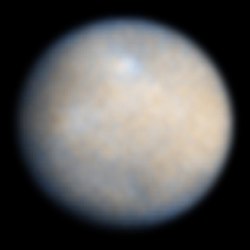
| 1 Ceres | 9.4 x 10²⁰ | 221 | spherical |
|
| 4 Vesta | 2.6 x 10²⁰ | 185 | borderline |
| 21 Lutetia | 1.7 x 10¹⁸ | 6.3 | irregular | |
|
| 253 Mathilde | 1 x 10¹⁷ | 0.27 | somewhat spherical |
|
| 243 Ida | 4.0 x 10¹⁶ | 0.36 | irregular |
|
| 951 Gaspra | 2.0 x 10¹⁶ | 0.24 | irregular |
| 433 Eros | 7.0 x 10¹⁵ | 0.12 | irregular | |
| 2867 Steins | 1.0 x 10¹⁴ | 0.0032 | irregular | |
| 4179 Toutatis | 5.0 x 10¹³ | 0.0027 | somewhat spherical | |
| 25143 Itokawa | 3.0 x 10¹⁰ | 2.0 x 10⁻⁵ | irregular |
There is somewhat a deficit of information beyond this. If you want to see more pictures of asteroids (like I do), you might be out of luck, because almost every one of the pictures above represents a major space exploration mission. There's also a pronounced deficit of information for Earth-like center pressures, since the above tables skips over an order of magnitude between Mathilde and Lutetia.
Note that pressure doesn't follow directly from mass. This is because the objects have different densities, and I used those when calculating the center pressure. A lower density will result in a lower central pressure, even for the same total mass. That is simply a quirk of self-gravitation.
Once we get to the extremely small bodies, they seem to commonly take on the shape of an prolate spheroid. Beyond one Earth atmosphere, the bodies all seem to conform to a roughly spherical envelope, even though there are a lot of irregularities on the surface.
For those small bodies, it's interesting to note that the speed of rotation also puts a limit on the amount of material stress we could expect from them. A list of fastest rotating objects shows that some have a rotation on the order of a minute, but these are all several meters in diameter.
Largest Bodies Identified Irregular
Another reference for this is the Wikipedia list of solar system objects by size. I went through that table and grabbed the largest objects that were identified as irregular. This is a good approach because it gives a mass figure below which irregular objects start to appear is large number. However, its major shortcoming is that we have no idea how many corresponding regular bodies exist around their mass scale.
| Object | M (kg) | Shape |
|---|---|---|
| Proteus (moon) | 5.0 x 10¹⁹ | irregular |
| Nereid (moon) | 3.1 x 10¹⁹ | irregular |
| 52 Europa | 1.7 x 10¹⁹ | irregular |
| Davida | 4.4 x 10¹⁹ | irregular |
| Sylvia | 1.5 x 10¹⁹ | irregular |
| Cybele | 1.8 x 10¹⁹ | irregular |
Reasonable accounting would put the limit for irregularity at somewhere between 1017 and 1019 kg. However, the limit I've found for a habitable inner pressure is around 1016, and can even be lower than that. Engineering limits are still more complicated. Even though bodies in this size range are irregular, they're still roughly spherical in many cases, indicating that material strength doesn't hold up on the scale of self-gravitational forces. Within the size range we're interested in, the bodies are showing that they withstand some deformation against the equipotential criteria, but exactly how much is unclear.
This evidence does give a clear message - that using an asteroid to hold breathable air would involve both self-gravitation forces, as well as some material pushback.
Wednesday, April 24, 2013
How Many Asteroids Would it take to House all of Humanity?
To begin with, I must return to the basic state equation that governs a gravity balloon.
$$ P = \frac{2}{3} \pi \rho^2 G t^2 \frac{\left(3R^2 + 3 R t + t^2\right)}{(R+t)^2} $$
This relates 3 variables, pressure, density, and radius. You need to draw the parallel between volume and the inner radius. Plus, there's somewhat of a 4th variable, which is the total mass of the structure, which can be substituted in and out (numerically usually) with the shell thickness, t. In the process of inflating an asteroid to make a habit the rock mass is constant. Really, you could say this equation is dual to the ideal gas law, in that combining the two fully determines the inner radius (and all other parameters).
Now, given that we have this relationship and methods for solving it, the number of humans that an asteroid or collection of asteroids can house depends on two factors:
- how much space you require per person
- how low of a pressure is okay
For the other limit, the amount of space to comfortably house a human, the numbers are much more ambiguous. On the one hand, we can compare this to other space stations, so I looked up the crew and volume of the International Space Station (ISS), getting a volume per person in cubic meters. We would want more volume than this, but it is an instructive lower bound. For the upper bound, we can look to Earth itself. How much atmosphere do we have per person? That's not a straight-forward question because we all live at different pressures, but with a reductionist goal, I simply divide the mass of Earth's atmosphere by the sea-level density. That gives the volume you would expect if you made a giant balloon of with all Earth's atmosphere and compressed it to sea-level pressure. Obviously this is an overshoot, but that's good, because we now have a clear overshoot and undershoot. These are different by roughly a factor of a million, so I introduced a middle-range number that's the square root of those two numbers multiplied. It's fairly arbitrary, but as far as I can guess, it's probably the best shot at a comfortable volume requirement for people. A 62 meter cube is awfully big, but we should consider that plants and other life would be important as well.
| ISS | Geometric Mean | Earth | |
|---|---|---|---|
| V (km3) per person | 0.0000001 | 0.000237847 | 0.565714286 |
| V (km3) for all humans | 700 | 1.7E+06 | 4.0E+09 |
| Side length (m) | 4.6 | 62.0 | 827.1 |
Unfortunately, I don't expect that I'll do better than a factor of a million. I can get all kinds of (also subjective) numbers for population density per area, but there's no clear idea of the ideal population density of humans per unit volume. In order to appreciate the full weight of the problem, it's useful to consider both extremes.
The one piece of information still missing is a list of existing asteroids. This would be complicated (though not impossible) to do one-by-one, so I'm using a size distribution function instead. The data to do this is very widely published, and I opted to simply use the size distribution list from Wikipedia. The table there gives a cumulative distribution. That is, the number of asteroids above so-and-so diameter. Effectively, a cumulative distribution function (CDF). I obtained a simple power distribution for the data.
Now that we have the CDF, we can also obtain the PDF. Of course, it is the derivative of the former, but since the CDF counts from largest (starting with Ceres) to the Nth asteroid, it's the PDF is the negative of the derivative. This is simply an artifact of how the counting is done.
$$ \text{CDF} = N(>D) = \left( 1.77 \times 10^6 \right) D^{-2.12} \\ \text{PDF} = \frac{dN}{dD} = \left( 3.76 \times 10^6 \right) D^{-3.12} $$
The data was limited to sizes that I already know would be usable as gravity balloons to get the best possible numbers. The exponent is somewhat consistent with other studies on the subject, which found an exponent of -4 (for the PDF) for the large asteroids. I will still use my above number since I know for a fact that it reproduces the numbers I want in this narrow range. With this, all of the information is there to find how many asteroids it would take to house all the human population given some pressure and volume requirement.
The form of the proposal is then to start with the smallest asteroids that is large enough to contain the desired internal pressure, "inflate" that asteroid to a very small volume, then move onto the next one. This next one is larger and thus, we will be able to inflate to a larger inner volume. This continues up the size scale of asteroids until the sum of the internal volumes of all the inflated asteroids comes out to the volume requirement. Density is required for these calculations. In previous posts I assumed a density of 1300 kg/m3, but here I'm changing that to 2000 kg/m3. Reason being that larger asteroids tend to have more volume, and the 1300 number was only a conservatively low number for fairly small asteroids.
On the subject of density, we frankly have no good idea of how dense these asteroids are on the whole. Generally speaking, the measurements of size come from back-calculations from the amount of light we get from the objects. This light does fairly faithfully represent the surface it exposes to space, and that says nothing at all about density. Because of this, we know diameters with much better certainty than what we know mass. For much larger bodies, there is another method for calculating mass, which is to observe their gravitational interactions. This method is completely impractical for the 5,000-some asteroids contained in the set that I'm interested in. It probably wouldn't be possible to employ the method even if the resources were there to do it on one, and doing it for a large number of the asteroids is even more impossible Given that, asteroid density will remain a very major source of uncertainty in all this writing. There isn't a clear basis to employ the figure of 2000 kg/m3 for the density of the set, but the densities are sporadic in the first place. I would prefer to just avoid multivariate PDF integration for the time being. There is certainly room for someone to write an academic paper about reasonable expectations for the full size and density distribution among asteroids. I've found myself at the practical limit of this research so that's my justification for using this generally representative number. It's possible to test the method with different densities and it changes within possibly an order of magnitude with a reasonable density range.
A fun way to give the answer to this query is to say "to get a pressure of 1 atmosphere you need to use asteroids A to Z", meaning that you would need to use all asteroids with sizes between those two candidates. Because of that, I'm quoting a reference asteroid to get the central pressure with no inflated volume (that is the "A"), and then an example asteroid for every volume case (that is the "Z"). Here are the numbers for the two different pressures.
| Case | Cumulative Volume Goal | D (km) | M (kg) | Inflated D (km) | Number Used | Nth Asteroid | Uninflated Pressure (atm) |
|---|---|---|---|---|---|---|---|
| starting size | 0 | 26.9 | 2.04E+16 | 0.0 | - | 277 Elvira | 1.00 |
| ISS | 700 | 28.3 | 2.37E+16 | 2.6 | 162 | 625 Xenia | 1.10 |
| Geometric Mean | 1.66E+06 | 42.8 | 8.21E+16 | 26.4 | 997 | 132 Aethra | 2.53 |
| Earth | 3.96E+09 | 241.4 | 1.47E+19 | 537.4 | 1,639 | 65 Cybele | 80.38 |
| Case | Cumulative Volume Goal | D (km) | M (kg) | Inflated D (km) | Number Used | Nth Asteroid | Uninflated Pressure (atm) |
|---|---|---|---|---|---|---|---|
| starting size | 0 | 15.7 | 4.05E+15 | 0.0 | - | 518 Halawe | 0.34 |
| ISS | 700 | 16.5 | 4.74E+15 | 1.6 | 508 | 433 Eros | 0.38 |
| Geometric Mean | 1.66E+06 | 26.7 | 1.99E+16 | 18.2 | 3,329 | 274 Philagoria | 0.98 |
| Earth | 3.96E+09 | 169.8 | 5.13E+18 | 417.6 | 5,152 | 54 Alexandra | 39.79 |
For example, in order to get an atmosphere volume equal to that of Earth at sea-level pressure, you would need to inflate all the asteroids larger than Elvira and smaller than Cybele (and possibly include those two as well). The value of this observation is that it shows that there is plenty of availability of asteroid material with which to make gravity balloon habitats. In fact, it's not hard to see at all how this approach could easily house more people than all the terrestrial environments in the solar system combined. I mean, provided that the middle-range value is a sufficient volumetric population density, then we have the potential for over 1000 times that volume, and that's not even touching the largest class of asteroids.
But how constructable would these things be? As I will write about later, there are some valid concerns of stability although they should be manageable. It follows that you work harder against the force of gravitational differentiation when you've "overextended" yourself by making an inner radius a great deal larger than the shell thickness. By looking at the inflated diameter number, you see that that only needs to be true if you require a volume on the scale of what Earth has, which would be a mega-scale engineering problem by its very definition. If you're looking at the middle-range volume requirement, the inner bubble is still relatively small compared with the overall dimension.
Regarding construct-ability, there's also the matter of the pressure before any inflation takes place. This could be a problem by making the center uninhabitable while the atmosphere is produced and supporting infrastructure is built. What is the maximum habitable pressure? I searched around for a few numbers. The compressed air reference points are fairly useless, because the atmosphere would be alien anyway. So given that, the maximum safe SCUBA pressure might be pretty good guidance. Comparing to the above table, it's clear that in order to make Earth volume scales, you will have to learn to deal with impractically high pressure, so it might be an uninhabitable environment to start out with. Thankfully, the pressure declines fairly quickly once the inflation is started, which I wrote about in a previous post.
- trimix suggested 3-4 atm
- compressed air limit 6.4 atm
- recommended diving limit 9.7 atm
- scuba record 31 atm
Ceres is the largest thing in the asteroid belt, and you can see that the distribution function expects just about 1 object at the large diameter values of about 900 km. The fact that my math predicts a diameter of only about 530 km is necessary for creation of Earth atmosphere volume shows that the idea is viable, because that doesn't exhaust all of the available mass. In fact, since Ceres comprises the majority of matter in the asteroid belt, my numbers leave the vast majority of the mass on the table. Ceres would be pretty impossible to break apart, for what it's worth. I calculate its internal pressure to be on the order of 900 atmospheres, which is a higher pressure than our power plant turbines use. This is a very high pressure.
Given some asteroid mass, then provided that it's large, the amount of volume you can obtain by making it into a gravity balloon scales as a 2/3rds power of the diameter. That exponent comes from the fact that a gravity balloon's functional mass-efficiency is a result of the surface area (2) to volume (3) ratio. One consequence of this is that you could actually produce a larger volume from the smaller asteroids by first smashing them into each other and then inflating the resultant body. Ideally, of course, you would just start with a larger asteroid.
What about the moons of the solar system? I've left those out of consideration so far. But to get an ideas of the general abundance of things suitable for a gravity balloon, I looked at what internal pressures you can find in the moons of various planets.
| 0.34 - 0.8 atm | 0.8-30 atm | higher | |
|---|---|---|---|
| Earth | 0 | 0 | 1 |
| Mars | 1 | 0 | 0 |
| Jupiter | 10 | 7 | 5 |
| Saturn | 2 | 2 | 6 |
| Uranus | 14 | 2 | 5 |
| Neptune | 1 | 9 | 3 |
| Total | 28 | 20 | 20 |
There are two major observations here. One, the asteroid belt has a vastly superior population small bodies (it also helps that it's closer to Earth than most planets) that would be good for small gravity balloons. If you wanted Ceres-sized things, however, there are a huge number of moons with absurdly huge internal pressures. It would be extremely difficult to do this in practice, but it's obvious that the matter of moons is easier to get to than that of planets themselves. The volume you could create with these objects goes through the roof.
If you inflated the moon in the simple way that I've written about so far, then you would end up with an object several times larger than the Earth itself (not the atmosphere, the whole thing).
Tuesday, April 16, 2013
Candidate Bodies to use as a Gravity Balloon
The Obvious Candidates
Suitable bodies for the creation of a gravity balloon are extremely numerous in our solar system, however, they're not at the doorstep of Earth. This is logical since the evolution of life required that Earth was not regularly hit by such bodies. For what it's worth, the KT extinction event is thought to have been caused by an asteroid 10-15 km in diameter. The factoid is interesting because it demonstrates that the minimum size needed to create a livable internal pressure in an asteroid is greater than the size that can cause mass damage on Earth, should it fall.
433 Eros
Predictably, the inner solar system is mostly devoid of the sweet spot of asteroids between about 20 and 60 km in diameter, the size necessary to contain a breathable atmosphere. One notable exception is Eros, which is a fairly large asteroid that currently hangs around the orbit of Mars and could one day impact Earth. Naturally, it's received a good deal of attention due to its unique status. It is large enough to turn into a gravity balloon with an initial internal pressure of 70% of Earth's sea-level pressure, if it were spherical (density is reported to be 2.67 g/cm3, and is used in the calculations). However, the shape clearly shows that it's not perfectly differentiated. This isn't exactly a problem for a gravity balloon, since it just demonstrates that its material has tensile strength comparable to the gravitational forces. This could be used to the advantage of people working with it, and could also make excavation somewhat more difficult. It would definitely be one of the top targets of future asteroid hunters.
I also want to include a second scale of about 60 to 80 km (diameter). These wouldn't be an ideal place to build a habitat right away, but with specific combinations of gases, humans can tolerate the pressures. If such an object was inflated significantly, the pressure would decrease anyway. Of course, development of that class would be relevant much further out in the future.
Phobos (moon of Mars)
Of the moons in the inner solar system, Phobos is the only suitable one. Mercury and Venus are thought to not posses any natural satellites. We could still discover some, but our efforts up to this point would have caught a mass lager than a 20 km diameter for either of these, so we're out of luck there. Earth's moon is vastly too large by comparison (and Earth's second moon is vastly too small). Development of infrastructure on the surface of the moon could, of course, be vital to space development but it couldn't hope to approach the flexibility that you could have in the inside of a gravity balloon. Ultimately, you could consider the possibility of breaking up larger bodies to turn them into multiple gravity balloons, but this would require monumental capability, probably on the scale of what's needed for terraforming. So for now we're just left with Phobos out of all the moons in the inner solar system, and I predict a central pressure of about 60% Earth's sea-level pressure. The density is 1.88 g/cm3, and it is at least somewhat close to spherical.
This candidate has lots of positives. For one, it's the only one that's currently being considered for manned missions by NASA. While it's not likely that we'll be drilling over a kilometer into it anytime soon, this offers a connection with current buildup of space efforts. Also, since there are significant public figures who are interested to see a million settlers on Mars, why not a million inside Phobos? After all, the latter could turn out to be a better idea - less difficulty in mining and moving material, radiation protection without claustrophobic caves, and a full Earth gravity. One of the major drawbacks is the fact that Phobos lies in a gravity well, in close orbit of Mars. The orbital period is only 7.5 hours, as opposed to a full month for Earth's moon. That makes it difficult to travel to and from other destinations in the solar system. Because of that, Eros could have an advantage in energy budget for travel. Tidal forces are also particularly strong, which would be an interesting technical complication.
Inner Edge of the Asteroid Belt
Now we're past Mars' orbit (1.66 AU) and we only have two workable candidates. It's true that there are others, both comets and asteroids, that occasionally swoop into the inner solar system at the closest point in their orbit, but these would be energetically difficult to reach, just like far-flung candidates, so I'm excluding them. In more scientific terms, I'm only interested in the location of the semi-major axis, which is a reasonable proxy for the energy required to reach them. The area with a great abundance of suitable gravity balloon candidates starts where the asteroid belt begins. To make the point, I gathered data on all asteroids within my size criteria (about 10 to 80 km diameter) and a semi-major axis closer than 2.5 AU. This was done using the JPL small-body database search engine.
As far as I know, this data doesn't include any mass, and with good reason - mass is difficult to calculate, and often inferred from brightness. They do give the calculated GM form of mass, calculated from orbital behavior, but this is only feasible for extremely large asteroids and almost none in my search criteria had that data. That means all I had was diameter, but this isn't a huge problem. I assumed a density of 1.3 g/cm3, which is largely thought to be representative of asteroids, or at least conservatively low for the majority of them. With this density, I find mass, and use the methods I've previously described to find their internal pressure at the center. I graphed this internal pressure over the semi-major axis values, which gives a good picture of the abundance of candidates throughout the inner solar system, up to 2.5 AU, covering some of the inner edge of the asteroid belt.
For the line that represents the limit of habitability, I'm using about 0.34 atmospheres, which is taken from Skylab. In that mission, they didn't use Oxygen gas exclusively, but the Nitrogen content was much lower than on Earth. That worked for them, although there are lingering concerns about using that type of atmosphere. For a gravity balloon, the reasons likely be different, because the gasses that you can get access to are fundamentally limited since you're only interested in in-situ resources. Oxygen gas would be comparitavely easier to make, so for early stages of self-sufficient space development it is thinkable we would use such a low atmosphere pressure. Importantly, doing so also broadens the types of candidates that can be used.
The density assumption obviously causes errors, but for the majority of these, we don't actually have better data. Give it another decade and that may change - this is one of the things I find most exciting about the subject right now. A good example of the innacuracy is Eros, which is shown to be below 34% of sea-level pressure in the graph, which is obviously not the case. Its density is very high, and that's why its in the wrong place. Otherwise, the spead of pressures observed here reflects the general abundance curve of asteroids. When I did the search, I included objects as low as 10 km diameter, just for illustrative purposes. I then removed all those below the habitable pressure line from the set.
Even though these are all the same semi-major axis, they're not all the same since some orbits are more elliptical than others. In order to illustrate this, I ordered the candidates from the reduced set (not all shown on that graph, about 50 in total) by the perihelion and plotted the perihelion and aphelion. This shows that many of the candidates in the set have a nearly circular orbit, but on the other extreme, some come as close as about 1.7 AU.
It's not immediately clear to me whether a more highly elliptic orbit is more or less favorable as a destination. On the one hand, uniformity throughout its year would be nice, but it's possible that more highly elliptical orbits could offer opportunistic trips. Either way, for the moment I selected the 9 candidates with the closest perihelion, just to have a small list to cite.
| Asteroid | Perihelion (AU) | Aphelion (AU) | Inclination (deg) | D (km) | M (kg) | P (atm) |
|---|---|---|---|---|---|---|
| 323 Brucia | 1.67 | 3.10 | 24.2 | 35.8 | 3.1E+16 | 0.75 |
| 220 Stephania | 1.74 | 2.95 | 7.6 | 31.1 | 2.1E+16 | 0.56 |
| 234 Barbara | 1.80 | 2.97 | 15.4 | 43.8 | 5.7E+16 | 1.12 |
| 1108 Demeter | 1.80 | 3.05 | 24.9 | 25.6 | 1.1E+16 | 0.38 |
| 916 America | 1.81 | 2.92 | 11.1 | 33.2 | 2.5E+16 | 0.64 |
| 783 Nora | 1.81 | 2.88 | 9.3 | 40.0 | 4.4E+16 | 0.93 |
| 584 Semiramis | 1.82 | 2.93 | 10.7 | 54.0 | 1.1E+17 | 1.70 |
| 219 Thusnelda | 1.83 | 2.88 | 10.8 | 40.6 | 4.5E+16 | 0.96 |
| 284 Amalia | 1.83 | 2.88 | 8.1 | 48.7 | 7.8E+16 | 1.38 |
This list is somewhat arbitrary, so I'll also give the entire list. If you want, you can search for the number and get information in public databases. These are all the candidates that met the selection criteria: 67, 585, 198, 142, 584, 284, 261, 270, 186, 248, 432, 306, 113, 138, 126, 1963, 161, 623, 234, 182, 118, 435, 219, 131, 136, 783, 282, 495, 302, 877, 556, 189, 732, 474, 930, 323, 178, 376, 249, 169, 916, 757, 220, 1244, 1159, 572, 273, 1650, 917, 364, 565, 853, 443, 470, 1108, 1296, 908, 3345
If you continue to go further out from 2.5 AU, there are many many more. Right now I'm not interested in those because, for one, they're more difficult to access from Earth, and two, they don't receive as much light. Even at a distance of 2.0 AU, you receive 1/4th the sunlight as Earth. Being able to continuously generate solar power without interruption from night is a benefit, but it may only break even the the common isolation values of about 208 W/m2 at 2.5 AU. Everything in this post is intended to answer the question "where would you build a gravity balloon". Phobos, Eros, and the above group are an obvious starting place, but beyond those it is less obvious.
Access to these Objects
It's hard to move something as large as the asteroids I'm talking about here. NASA is currently working on a plan where they'll bring a near-Earth asteroid into orbit around the Earth-moon system. But this plan calls for moving an object 7 meters in diameter that is already near-Earth. For a gravity balloon, we're talking about objects 20 km in diameter, that are not near Earth. The scope of moving such a thing is orders of magnitude beyond reasonability, and I place in the same fesiability category as terraforming - scale being in the millions of years. So we're stuck with working with them in-place.
In order to give a good technical argument, I wanted to give the Delta v budget associated with accessing these places. A complication, however, is that there isn't a single value associated with this. To get from Earth to the surface of Phobos, for instance, one would have to travel out of Earth's gravity well, work against the gravity of the sun to get to Mars, descend to Phobos orbit, and then climb down Phobos' gravity well. These are 4 components but the first one is identical for all possible locations. Because of that I'm only going to focus on the latter 3, for purposes of comparison between the candidates.
- Delta-V needed to get to its orbit around the sun
- Delta-V needed to get to its orbit around its planet (in the case of a moon)
- Delta-V needed to descend to its surface
For the case of reaching a planet's moon, we need a variation on the above formula. To do this, I'm equating the r2 value to infinity and r1 to the orbit of the moon. This isn't very accurate because it ignores everything about gravity assists and probably aerobraking, so it should be taken with a grain of salt.
$$ v_e = \sqrt{ \frac{ 2 G M }{ r } } $$
With all these, we can get a simple table of the Delta-Vs. In a simplistic sense, the values are addative, if you consider that a spaceship has to get to one location, stop, then go to the next. Real life isn't exactly so simple, but this is the best I will do for now. We also need to qualify that significant work is needed to get away from the Earth in the first place. Low Earth Orbit costs about 10 km/s to begin with, and then from there to escape is on the order of 4 km/s. Due to the rocket equation, however, accelerating 2 kg to 4 km/s is much much easier than accelerating 1 kg to 8 km/s.
| Object | R (km) | M (kg) | a | moon R (km) | sun | planet | self |
|---|---|---|---|---|---|---|---|
| Phobos | 11.1 | 1.07E+16 | 1.52 | 9,377 | 5.589 | 0.885 | 0.011 |
| 433 Eros | 8.4 | 6.69E+15 | 1.46 | - | 5.072 | 0 | 0.010 |
| 323 Brucia | 17.9 | 3.13E+16 | 2.38 | - | 10.027 | 0 | 0.015 |
| 220 Stephania | 15.6 | 2.05E+16 | 2.35 | - | 9.904 | 0 | 0.013 |
| 234 Barbara | 21.9 | 5.70E+16 | 2.39 | - | 10.041 | 0 | 0.019 |
| 1108 Demeter | 12.8 | 1.14E+16 | 2.43 | - | 10.178 | 0 | 0.011 |
| 916 America | 16.6 | 2.50E+16 | 2.37 | - | 9.967 | 0 | 0.014 |
| 783 Nora | 20.0 | 4.36E+16 | 2.34 | - | 9.894 | 0 | 0.017 |
| 584 Semiramis | 27.0 | 1.07E+17 | 2.37 | - | 9.995 | 0 | 0.023 |
| 219 Thusnelda | 20.3 | 4.54E+16 | 2.35 | - | 9.928 | 0 | 0.017 |
| 284 Amalia | 24.3 | 7.84E+16 | 2.47 | - | 10.320 | 0 | 0.021 |
The main takeaway from this chart is that the propulsion needed to travel from Earth to the object dominates. The value for the stellar Delta V for Phobos is just that of Mars. Compare to a more accurate Delta-V, which includes some of the more harry real aspects of the real solar system. The sum of all the transfers to get to Mars, I find comes out to 0.7+0.6+0.9 = 2.2. This is much lower than the 5.5 I found, which is unsurprising considering the factors I didn't consider. This also begs an interesting question, as to whether travel to Eros would actually be easier than travel to Phobos, and it looks like not, unless you are possibly considering the effort to get back to Earth (which should be more for Phobos).
Inflatability
So far I've only considered the challenge of getting to an asteroid, drilling to the center, and setting up shop there no matter how big of a volume. This wouldn't be very useful in the long run unless the favorable scaling factors over rigid pressure boundaries could be exploited at some point. Thus, it's a good question to ask how large of a volume could you get out of these objects before your pressure limits stopped you. I've already covered the mathematics of doing this in previous posts.
The requirement of the maximum size will be that it has a pressure equal to what the Skylab space station had, about 34 kPa. Then with some root finding routines, the inner radius that gives this pressure (given the object's mass and density) is found. That then implies the internal volume. This is fairly straightforward, and here are the numbers I obtained.
| Object | M (kg) | rho (kg/m3) | R inner (km) | V (km3) |
|---|---|---|---|---|
| Phobos | 1.07E+16 | 1876 | 4.74 | 447 |
| 433 Eros | 6.69E+15 | 2670 | 4.33 | 340 |
| 323 Brucia | 3.13E+16 | 1300 | 9.84 | 3993 |
| 220 Stephania | 2.05E+16 | 1300 | 6.13 | 966 |
| 234 Barbara | 5.70E+16 | 1300 | 16.14 | 17620 |
| 1108 Demeter | 1.14E+16 | 1300 | 1.43 | 12 |
| 916 America | 2.50E+16 | 1300 | 7.81 | 1994 |
| 783 Nora | 4.36E+16 | 1300 | 13.15 | 9525 |
| 584 Semiramis | 1.07E+17 | 1300 | 24.78 | 63773 |
| 219 Thusnelda | 4.54E+16 | 1300 | 13.58 | 10489 |
| 284 Amalia | 7.84E+16 | 1300 | 20.20 | 34507 |
I wanted a good way to illustrate this, since a large inner volume is the entire point of the gravitational balloon. In the following illustration, I made the size of a dot proportional to the inner volume in a graph of the mass versus inner radius. This means that the volume follows directly from the radius, as per 4/3 Pi R3, but the inner radius isn't a direct function of the mass because the densities of the objects can be different. Indeed, this is why Phobos and Eros are outliers. I had actual densities for those two while the inner-belt asteroids were assumed to be the same, so they lie on the same (imaginary) curve. You can even see how Eros maintains almost the same volume (dot size) as Phobos, in spite of having much less mass. This is because the effects of self-gravitation are greater for Eros, because it has a higher density.
The takeaway from this graph staring you in the face is that the potential size of a habitat grows very fast with size of the asteroid you use. About half of the potential volume comes from Semiramis alone. That's not even the largest in the group, out of the larger group of 50 or so asteroids in the inner edge of the asteroid belt, there are candidates much much larger than that. If you've read my previous posts, you may be wondering how Semiramis can give such a large volume compared to my original large reference case in the introduction. That's because I used a pressure of 0.8 atm in that case, and 0.34 atm here. The latter might be somewhat uncomfortable, it's hard to say, but for the most near-term prospects of in-situ resource utilization, it's probably the most reasonable assumption. It would be much smaller if you required 1 atmosphere, and Phobos and Eros would be entirely unusable.
In closing, I discovered a few things that I wasn't entirely certain of before. Firstly, Phobos and Eros are quite inflatable if you use an atmosphere with reduced Nitrogen concentration. In fact, at around 9 km inner diameter that would be quite spacious, larger than any other space habitat would could possibly hope to build, and large enough to build artificial gravity tubes. Also, I was surprised by the sudden increase in density of large asteroids at around 2.2 AU. Obviously this is because of the clearing effect of Mars, but it's still interesting. There are lots and lots of options around there. Finally, the difficulty to travel to those asteroid belt candidates is much more burdensome than the Eros or Phobos options. Those two are probably the best we've got for anything near-term in the absence of other information. But that other information could be substantial. You would obviously have your pick of compositions if you went as far as the asteroid belt and that could also reduce the amount of equipment that has to be hauled in the journey, as well as the difficulty of actually manufacturing the atmosphere.